
User Support and Experience Programme (USEP)
Introduction

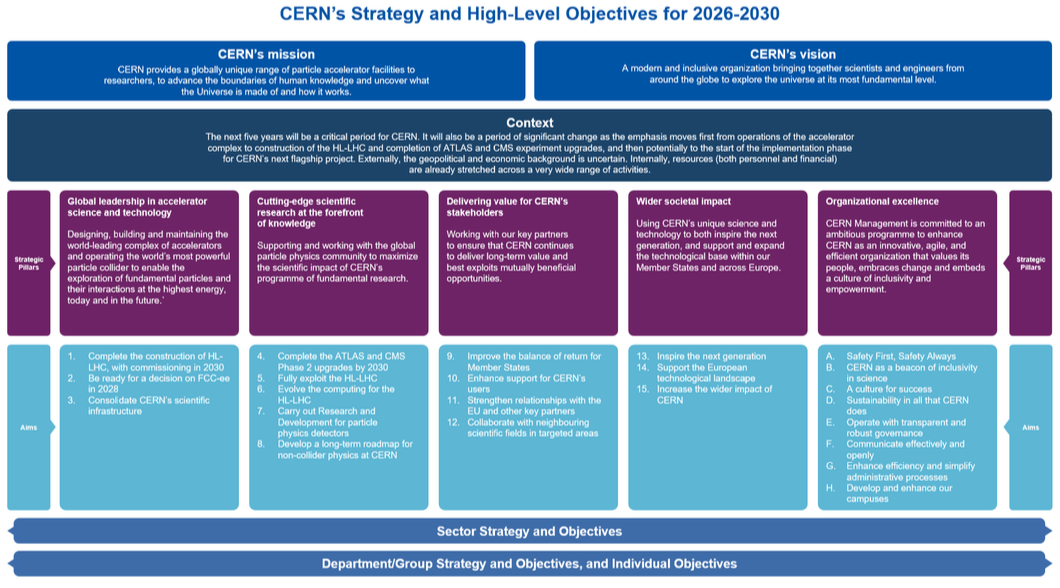
The CERN Strategy 2026-2030 identifies enhanced support for CERN’s Users as a strategic objective under Pillar 3 “Delivering value for CERN’s stakeholders”, specifically Aim 10 “Enhance support for CERN’s Users”. The strategy recognises that Long Shutdown 3 (LS3) will represent the largest challenge faced by the ATLAS and CMS collaborations since the construction of the original detectors and highlights the need to further increase the attractiveness of CERN to visiting Users.1
The User Support and Experience Programme (USEP) provides a lightweight cross-departmental framework to coordinate and prioritise initiatives that improve the experience of CERN Users, particularly during LS3, while delivering sustainable long-term improvements. The programme builds on contributions from multiple departments and services and promotes a user-centred approach to the development and delivery of CERN services.
Success Stories
Here we will start describing concrete implementation success stories.
Expanded opening hours of Restaurant 1 (pilot)
As of 20 May 2026, the opening hours of R1 have been extended from 22:00 to 23:00 three days per week (Wednesday to Friday). Food offer (hot and cold snacks, desserts) will be maintained until 23:00. If the pilot phase demonstrates appropriate adoption of this offering, opening hours will remain extended.

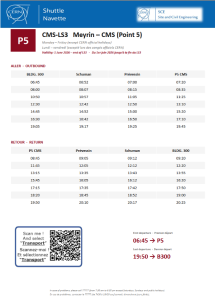
New shuttle service to P5 during LS3
A new shuttle service to Point 5 (Meyrin > Schumann > Prévessin > P5) has been established as of 1 June 2026. The service will support additional needs of the User community during LS3 to access P5, the most remote point of CERN. The new shuttle will operate until the end of LS3.
Project Execution and Budget Evolution
In this section, the USEP team will transparently report on the number of projects executed and how this is reflected in the programme’s budget evolution.
Complete list of improvements
| Expanded opening hours of R1 on Wednesday to Friday | DONE |
| New LS3 shuttle service to P5 | DONE |
| P5 Click & Delivery option for better catering during LS3 | DONE |
| Creation of storage space for professional material in buildings 1 & 892 | ONGOING |
| Creation of a BBQ area at P5 | ONGOING |
USEP KPIs
| KPI | Definition | Unit | Target | Current | Trend |
|---|---|---|---|---|---|
| Overall User Satisfaction | Based on periodic surveys (1–5 scale), including key service domains (e.g. mobility, workspace, IT, onboarding, administrative support). Scope: MPA holders with at least 5% annual presence. | Score | +0.3 | n/a | |
| Participation in Surveys | Percentage of active Users responding to the most recent User satisfaction survey. Trend in comparison to previous survey. | % | 10 | 12 | |
| Review and Tracking of Submitted Actions | Percentage of submitted improvement actions reviewed and tracked within defined governance timelines. | % | 100 | n/a | |
| Delivery of Approved Actions | Percentage of approved actions delivered according to the agreed schedule. | % | >80 | n/a |
USEP provides strategic oversight and prioritisation of initiatives that improve the CERN User experience. Please also refer to the USEP Terms of Reference.
The programme will:
- Support the implementation of CERN Strategy Aim 10
- Identify and prioritise improvements based on User needs, operational and budget constraints
- Coordinate actions involving multiple departments and service providers
- Deliver tangible, short-term enhancements during LS3 and beyond
- Monitor progress through agreed Key Performance Indicators (KPIs)
- Maintain transparency on priorities, decisions and implementation status
USEP does not replace the operational responsibility of service providers, which remains within the relevant departments and groups.
USEP focuses on enhancing the overall experience of all Associated Members of the Personnel (MPAs), as defined in Administrative Circular No. 11, who have a declared on-site presence of at least 5%.
The programme covers services, infrastructure, processes and operational arrangements that directly affect Users’ ability to work efficiently and effectively at CERN.
A dedicated budget has been allocated for the years 2026-2029 to ensure the availability of the resources required to implement and sustain the programme.
Priorities backlog of in-scope improvements